

The Invisible Food Growers: Why Smallholder Families Could Shape the Future of Farming
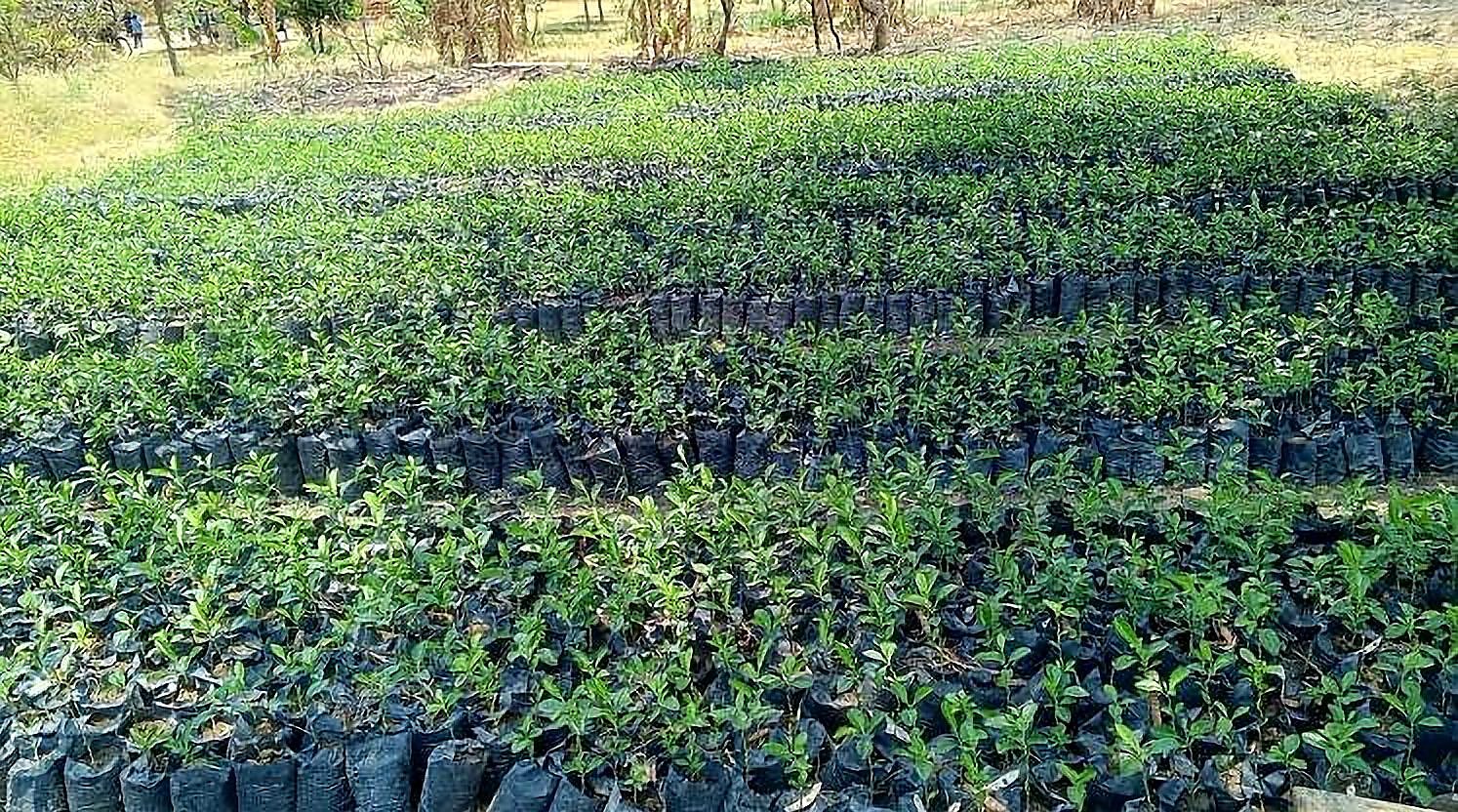
Who feeds the world? Most of us picture endless wheat fields, giant combine harvesters and global agribusiness. A large part of the answer, though, grows on plots smaller than three football pitches.
The people who farm these plots rarely feature in debates about climate and food. Hugh Locke's new book, Whole Earth Farming, puts them at the center. It asks a question that also shapes our work at Planting Hope: what if we saw smallholder families not as recipients of aid, but as the people leading the change?
A quarter of humanity, hiding in plain sight
There are more than 570 million farms worldwide, and over 475 million of them are smaller than two hectares [1]. Counting the families behind those farms, Locke arrives at roughly a quarter of humanity [3].
According to a 2018 study, these small farms produce around 30 to 34 percent of the world's food supply [2]. They do it while working only a small share of the world's farmland [1].
You will often read that smallholders produce 70 to 80 percent of the world's food. That figure doesn't hold up under scrutiny [2]. We use the lower, evidence-based number on purpose. It is impressive enough.
The same study shows what sets small farms apart [2]:
🌱 They grow a wider variety of crops.
🍲 More of their harvest goes straight to feeding people rather than into animal feed or processing.
🥭 They are key suppliers of fruit, pulses, roots and tubers.
What Hugh Locke proposes in Whole Earth Farming
Locke has spent decades bridging international development and work in the field. In 2010 he co-founded the Smallholder Farmers Alliance in Haiti [3], where farming families plant trees and earn credits they can exchange for seeds, tools and training [4].
His mentor was the forester Richard St. Barbe Baker, an early champion of protecting the world's forests [3]. Trees have run through Locke's work ever since.
The book, published in English in September 2026, brings together traditional Indigenous knowledge, current ecological research and values for responsible care of the earth [3]. Its central claim is deliberately bold. If just half of the world's smallholders moved to regenerative farming, Locke argues, they could grow all the additional food the world needs by 2050 on around twelve percent of its arable land, while also helping to counter climate change [3].
Regenerative farming means building soil up instead of wearing it down, through compost, diverse crops and trees in the fields. Nobody can say for certain today whether Locke's numbers will hold. We find the direction convincing, though, because it starts with the people who know their land best.
The book also tells 21 stories from 18 countries, from Canada to India to Rwanda [3]. One of them takes readers to Colombia and our partner organization FUNDAEC.
What this looks like on the ground: our partners in Colombia and Zambia
What Locke describes at a global scale, we see on a small scale with our partners. Here are two examples from the TwoWings Foundation's 2025 activity report.
Colombia: tree nurseries instead of monoculture
Family farms in northern Cauca once grew a rich mix of fruit, medicinal plants, timber and vegetables. Over recent decades, sugarcane monoculture has drained the soil and pushed traditional knowledge aside.
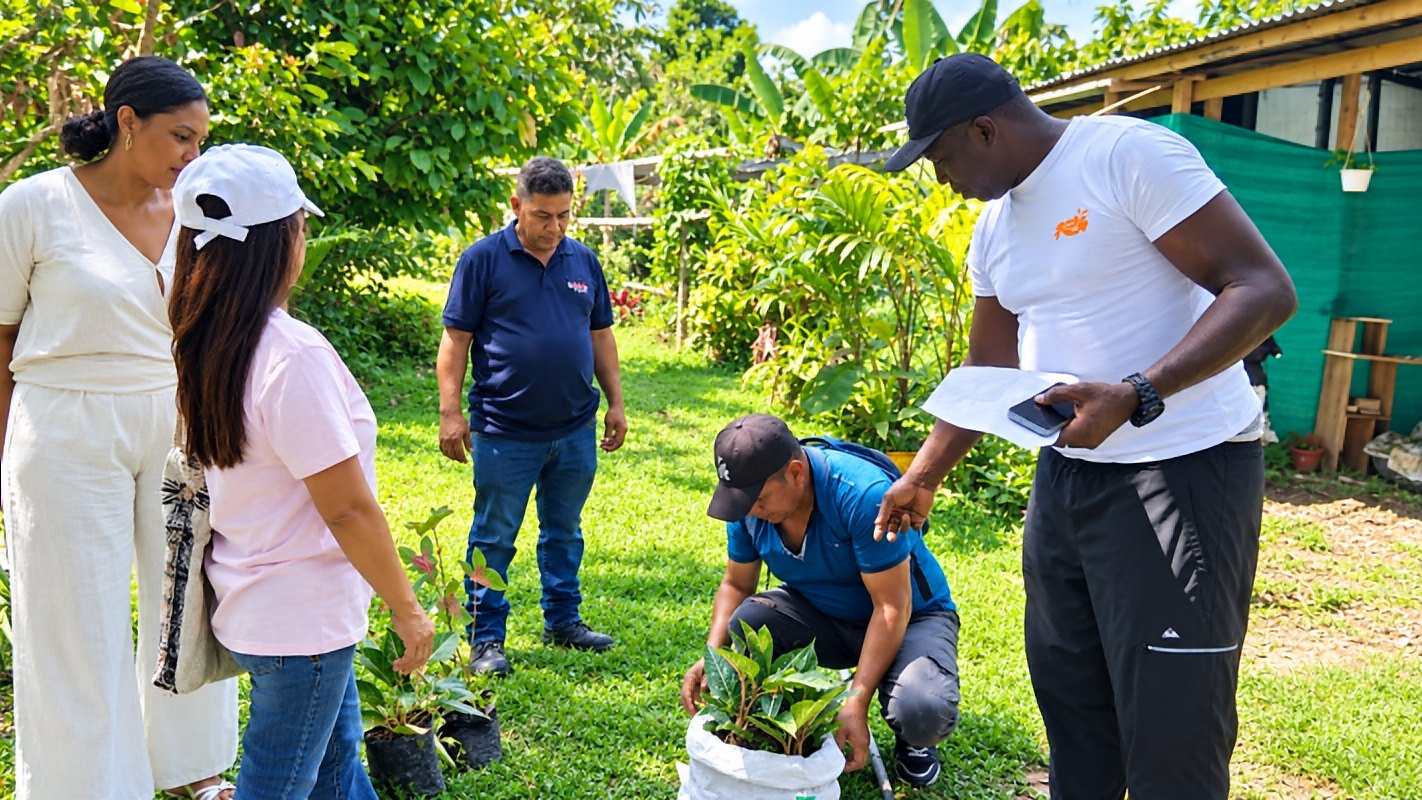
Together with local families, FUNDAEC is building a network of small tree nurseries and composting sites. There are now seven production units. The network aims to make native fruit trees, now rare in the region, available again.
Each unit keeps its own records of investment, sales and profit, and several are already selling plants. Participants are becoming small business owners.
Zambia: orchards in family hands
In 2025, our partner organization the Inshindo Foundation planted 4,070 trees through its tree planting project [5]. Over three project years, 59 orchards have been established, 51 of them owned by families. In the fields, soil-improving trees such as the nitrogen-fixing msangu tree grow alongside crops.
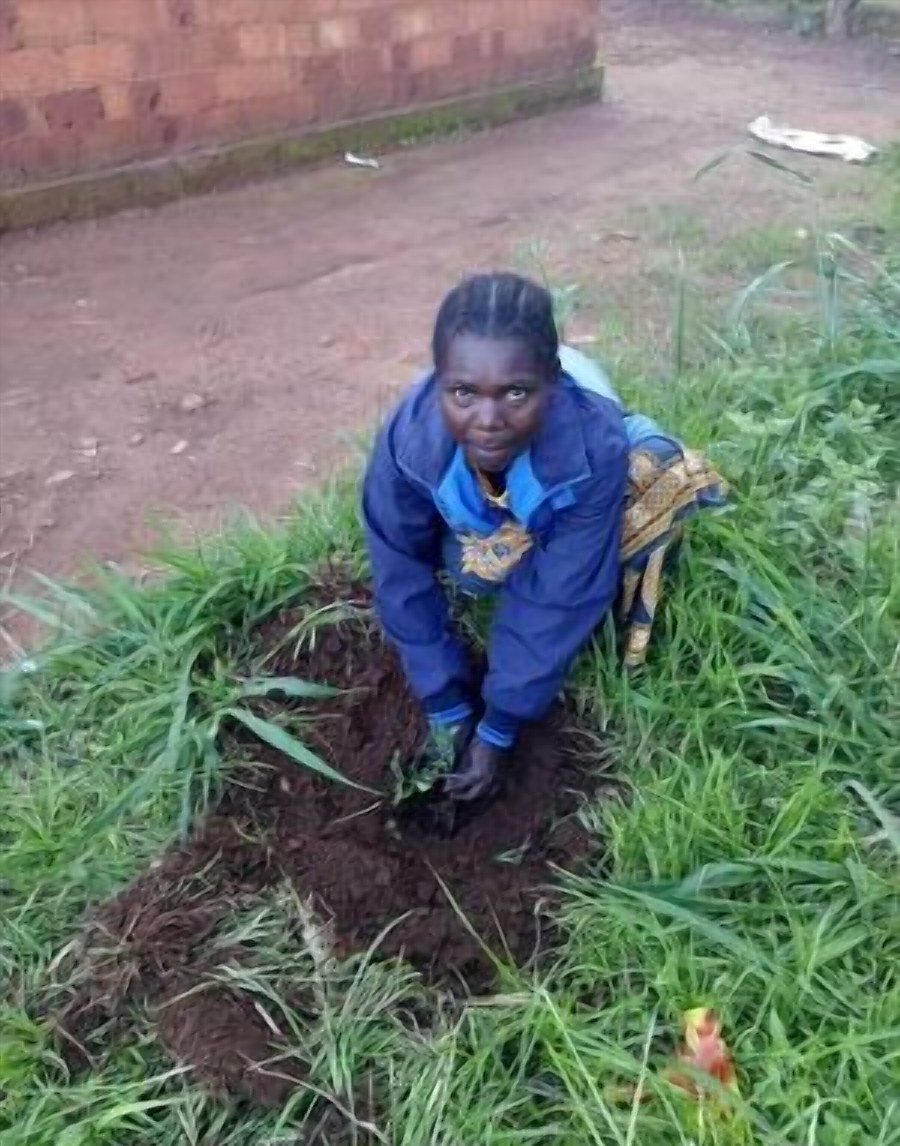
One lesson from the team fits Locke's argument especially well. Orchards that families look after themselves are doing clearly better than those managed communally, so the project will focus more on them going forward [5].
Not every season goes smoothly, and water remains the biggest constraint [5]. Regenerative farming doesn't run itself. It takes time, knowledge and steady support.
In summary: hope that takes root
Smallholder families already feed a large part of the world. Locke's book shows how much more is possible when they have access to knowledge, plants and markets. Our partners in Colombia and Zambia show what that path looks like day to day: step by step, with setbacks, and carried by the people who live there.
To go deeper, read our post on the basics of agroforestry or "One Field, Three Harvests", where we follow a full season with Inshindo in Zambia. Whole Earth Farming is published by George Ronald.
If you'd like to support the work of FUNDAEC and the Inshindo Foundation, you can find everything about donating here.
Sources
[1] Lowder, S. K., Skoet, J., Raney, T. (2016): The Number, Size, and Distribution of Farms, Smallholder Farms, and Family Farms Worldwide. World Development 87, pp. 16-29. https://doi.org/10.1016/j.worlddev.2015.10.041
[2] Ricciardi, V. et al. (2018): How much of the world's food do smallholders produce? Global Food Security 17, pp. 64-72. https://doi.org/10.1016/j.gfs.2018.05.002
[3] Locke, H. (2026): Whole Earth Farming. Smallholders and the Great Regenerative Transformation. George Ronald.
[4] Purchase College: Hugh Locke profile. https://www.purchase.edu/live/profiles/2906-hugh-locke
Green Your Inbox!
With our Newsletters, Stay updated on our Stories of Change and Growth.
As a gift, get a personalised Nature E-card from PH.


