

A Season Inside Our Agroforestry Program in Zambia
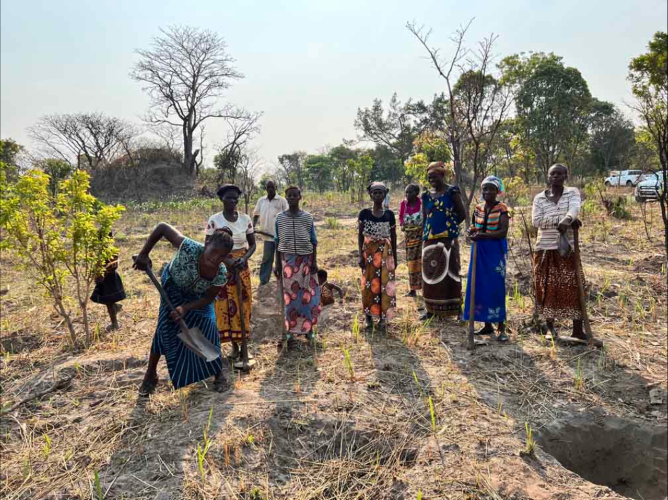
A field usually produces one harvest. On the plots our partner Inshindo works with in Zambia, the same piece of land now produces three at once, food, fertile soil, and a growing community.
How one field starts producing three harvests
In Zambia, Inshindo runs the Environmental Health Programme, one of the environmental projects we support as Planting Hope. It is not built around single tree-planting events. It is built around a system, where trees stop sitting next to farming and start becoming part of it.
For the families involved, that does not mean three separate projects. It means one field that does more than it used to, season after season.
The first harvest: food
In 2024, the program planted 1,367 fruit trees, among them oranges, tangerines, guavas, lemons, and papayas. They now stand on school grounds, at churches, in villages, and on family farms.
That work created 17 new orchards, bringing the total to 20. Each one is a food source that does not depend on a single harvest, but keeps producing for years.
Where the trees come from
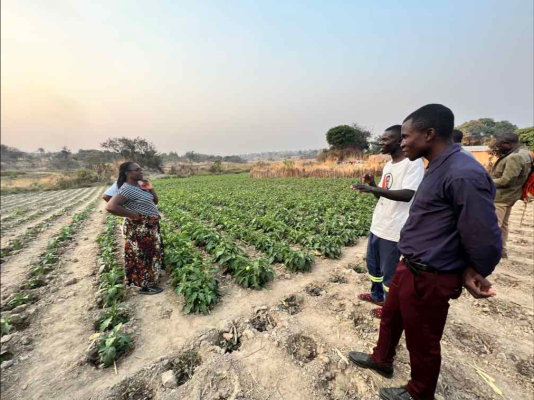
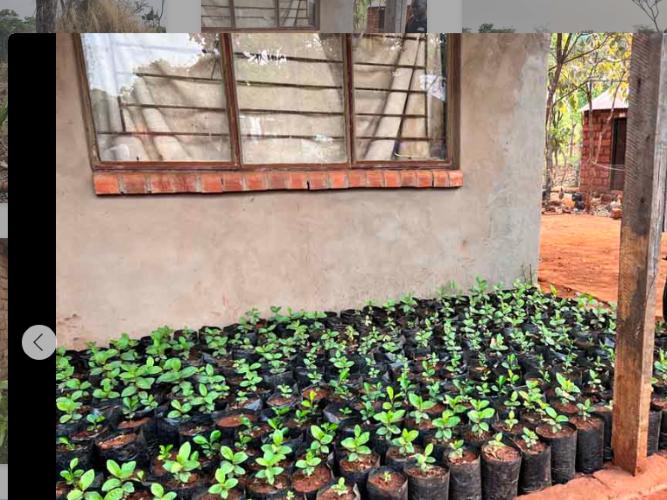
Not every tree in the program is bought in. 2,447 seedlings came from the program's own nurseries, about 71 percent of that year's planned capacity.
It sounds like a technical detail, but it marks the difference between a project that depends on outside deliveries and one that increasingly grows its own supply.
The second harvest: fertile soil
Alongside the fruit trees, the program plants Msangu, a nitrogen-fixing tree that feeds the soil naturally. 63 farmers integrated 713 of these trees directly into their fields.
A Msangu tree does more than improve the ground it grows in. It also improves what a family plants on that same field the following year, without needing extra chemical fertilizer.
The third harvest: a growing community
287 families planted 2,734 trees at their own homes. Over the same period, active participants grew from 126 to 287, more than doubling in a single year.
Not every season went smoothly. A drought across 2023 and 2024 meant roughly 40 percent of previously planted trees did not survive, and caterpillars, termites, and bushfires damaged young orchards further.
When seedlings were stolen in some communities, the program did not respond with punishment. It responded by inviting the people involved to join the project instead, a choice that says as much about the program as the trees themselves.
Daily life adds its own obstacles in some areas. Land is scarce in urban settings like Kabwe, while poor transport links make regular contact with families harder in more remote areas such as Kanongesha and Muswishi.
Since 2024, a digital platform called Nyitondu has supported the tracking of planted trees. The program itself runs on a network that includes Zambia's Forestry Department, commercial nurseries such as Amadeus Farm and Chiwala Farm, traditional village authorities, schools, and churches.
Taken together
Three harvests from one field are not a coincidence. They are what happens when farming, environmental protection, and community are treated as one system instead of three separate concerns, which is exactly how we understand agroforestry at Planting Hope.
The figures in this post come from the TwoWings Activity Report 2024.
For the basics of how agroforestry works, see our earlier post here.
If you would like to support our work with Inshindo in Zambia, you can find out how your donation helps at plantinghope.at.
Green Your Inbox!
With our Newsletters, Stay updated on our Stories of Change and Growth.
As a gift, get a personalised Nature E-card from PH.